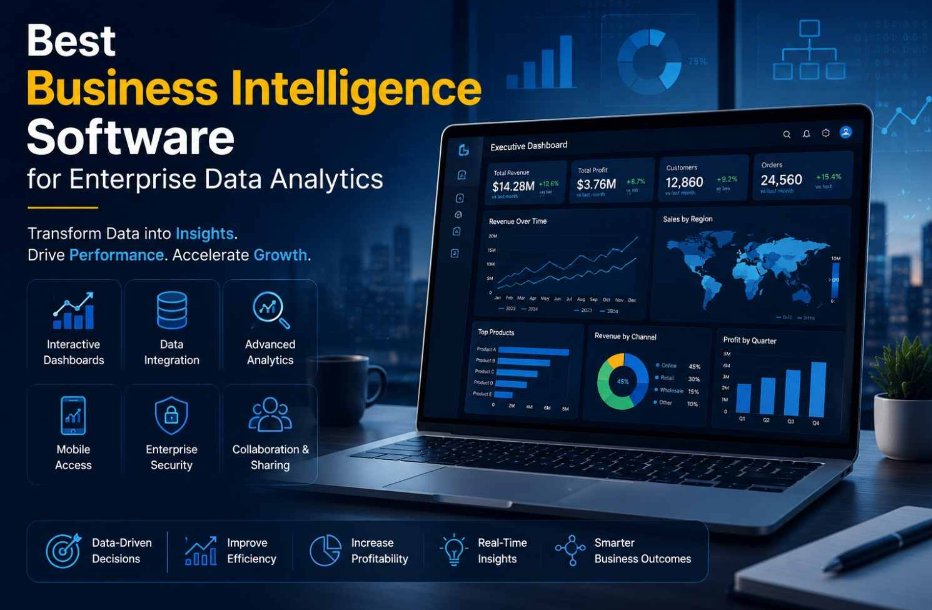
In today’s highly competitive digital economy, organizations are under constant pressure to improve productivity, reduce costs, and make smarter decisions faster than ever before. One of the most effective ways to achieve these goals is by implementing business intelligence software for operational efficiency.
Business Intelligence (BI) software transforms raw business data into actionable insights, helping organizations identify inefficiencies, streamline workflows, optimize resource allocation, and improve overall performance. Whether you’re running a startup, a mid-sized company, or a global enterprise, modern BI solutions can become the backbone of your decision-making process.
This comprehensive guide explores how business intelligence software improves operational efficiency, key features to look for, benefits, implementation strategies, and the best solutions available today.
What Is Business Intelligence Software?
Business Intelligence software refers to a collection of technologies, tools, and applications designed to collect, process, analyze, and visualize business data.
Instead of relying on intuition or manual reporting, BI software enables organizations to:
- Monitor KPIs in real time
- Analyze trends and patterns
- Improve operational workflows
- Forecast future performance
- Identify bottlenecks
- Reduce operational costs
- Support strategic decision-making
The primary goal is simple:
Turn data into profitable actions.
Why Operational Efficiency Matters
Operational efficiency measures how effectively a company uses resources to produce goods or services.
Efficient businesses can:
- Increase profitability
- Reduce waste
- Improve customer satisfaction
- Scale operations faster
- Enhance employee productivity
Common operational challenges include:
- Data silos
- Manual reporting
- Slow decision-making
- Inventory issues
- Inefficient workflows
- Resource misallocation
Business intelligence software helps solve these problems by providing visibility across every aspect of operations.
How Business Intelligence Software Improves Operational Efficiency
1. Real-Time Data Visibility
Traditional reporting often relies on weekly or monthly reports.
By the time managers review data:
- Problems may have escalated
- Opportunities may have disappeared
- Costs may have increased
Modern BI platforms provide:
- Live dashboards
- Automated reporting
- Real-time alerts
This enables businesses to act immediately.
Example
A manufacturing company can monitor:
- Production output
- Equipment downtime
- Inventory levels
- Labor utilization
in real time.
2. Process Optimization
BI tools help identify bottlenecks across business operations.
Organizations can analyze:
- Order fulfillment processes
- Supply chain performance
- Customer service workflows
- Production cycles
Data-driven insights reveal:
- Delays
- Redundant tasks
- Resource shortages
- Performance gaps
Once identified, companies can streamline processes for maximum efficiency.
3. Better Resource Allocation
Many businesses waste resources because they lack visibility.
Business intelligence software helps managers understand:
- Employee productivity
- Department performance
- Budget utilization
- Equipment usage
As a result, organizations can allocate resources where they generate the highest return.
4. Predictive Analytics
Advanced BI platforms use machine learning and predictive analytics.
These tools can forecast:
- Sales trends
- Inventory requirements
- Customer demand
- Staffing needs
- Operational risks
Predictive insights allow organizations to proactively address issues before they occur.
5. Automated Reporting
Manual reporting consumes valuable time.
Employees often spend hours collecting and formatting data.
BI software automates:
- Data collection
- Report generation
- KPI monitoring
- Performance tracking
This reduces labor costs and improves reporting accuracy.

Key Features of Business Intelligence Software for Operational Efficiency
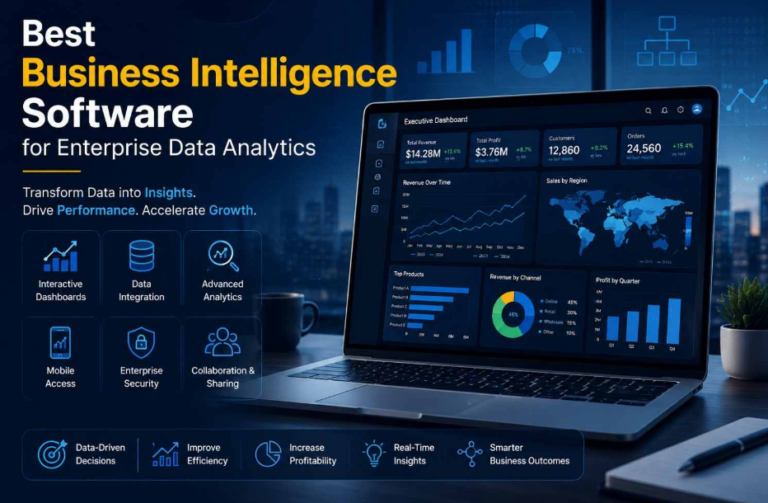
Interactive Dashboards
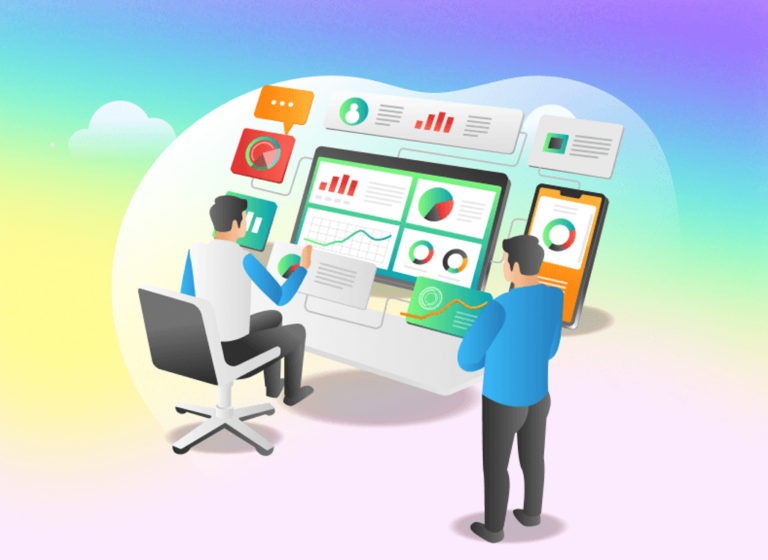
Dashboards provide visual representations of business performance.
Common metrics include:
- Revenue
- Expenses
- Productivity
- Inventory levels
- Customer satisfaction
Interactive dashboards enable users to drill down into specific data points.
Data Integration
The best BI solutions connect with:
- CRM systems
- ERP software
- Accounting platforms
- Marketing tools
- HR systems
- Cloud databases
Unified data provides a complete operational picture.
Advanced Analytics
Advanced analytics features include:
- Trend analysis
- Statistical modeling
- Forecasting
- Machine learning
- Predictive analytics
These capabilities support strategic planning and operational optimization.
Self-Service Analytics
Employees can generate reports without IT assistance.
Benefits include:
- Faster insights
- Reduced IT workload
- Greater productivity
- Improved decision-making
Mobile Accessibility
Modern BI software allows users to access dashboards on:
- Smartphones
- Tablets
- Laptops
Decision-makers can monitor operations from anywhere.
Major Benefits of Business Intelligence Software
Increased Productivity
Employees spend less time gathering data and more time acting on insights.
Productivity improvements often exceed 20–30%.
Reduced Operational Costs
BI software helps identify:
- Wasteful spending
- Inefficient processes
- Resource overutilization
Organizations can significantly lower operating expenses.
Faster Decision-Making
Executives gain instant access to critical information.
This enables quicker responses to:
- Market changes
- Operational issues
- Customer demands
Improved Customer Experience
Business intelligence helps analyze:
- Customer behavior
- Service performance
- Support response times
Organizations can deliver better customer experiences.
Competitive Advantage
Data-driven organizations outperform competitors because they make smarter decisions faster.
Industries Benefiting from Business Intelligence
Manufacturing
Manufacturers use BI to monitor:
- Production efficiency
- Equipment performance
- Quality control
- Supply chain operations
Benefits
- Reduced downtime
- Lower production costs
- Improved output
Retail
Retailers analyze:
- Sales performance
- Customer preferences
- Inventory levels
- Seasonal trends
Benefits
- Better stock management
- Increased sales
- Enhanced customer satisfaction
Healthcare
Healthcare organizations use BI for:
- Patient management
- Resource utilization
- Cost control
- Clinical performance
Benefits
- Improved care quality
- Reduced administrative costs
Finance
Financial institutions rely on BI for:
- Risk management
- Fraud detection
- Regulatory compliance
- Profitability analysis
Benefits
- Better risk assessment
- Improved operational efficiency
Logistics
Logistics companies monitor:
- Fleet performance
- Delivery times
- Fuel consumption
- Route optimization
Benefits
- Lower transportation costs
- Faster deliveries
Essential KPIs to Monitor
Operational efficiency depends on tracking the right metrics.
Important KPIs include:
Productivity KPIs
- Output per employee
- Revenue per employee
- Task completion rate
Financial KPIs
- Operating margin
- Cost per unit
- Expense ratio
Customer KPIs
- Customer satisfaction score
- Net Promoter Score (NPS)
- Customer retention rate
Supply Chain KPIs
- Inventory turnover
- Order fulfillment rate
- Delivery accuracy
Operational KPIs
- Cycle time
- Downtime
- Resource utilization
Top Business Intelligence Software Solutions
Microsoft Power BI
Popular for:
- Affordable pricing
- Strong Microsoft integration
- Advanced analytics
- Easy dashboard creation
Ideal for:
- Small businesses
- Enterprises using Microsoft ecosystems
Tableau
Known for:
- Exceptional data visualization
- Interactive dashboards
- Enterprise-grade analytics
Ideal for:
- Data-driven organizations
Qlik Sense
Strengths include:
- Associative analytics
- AI-powered insights
- Flexible deployment
Ideal for:
- Medium and large enterprises
Looker
Features:
- Cloud-native architecture
- Advanced modeling
- Google ecosystem integration
Ideal for:
- Data-centric organizations
SAP BusinessObjects
Designed for:
- Large enterprises
- Complex reporting requirements
- Enterprise-scale analytics
Ideal for:
- Global organizations
Implementing Business Intelligence Successfully
Step 1: Define Business Goals
Determine what operational challenges need solving.
Examples:
- Reduce production costs
- Improve customer service
- Increase employee productivity
Step 2: Identify Data Sources
Collect data from:
- ERP systems
- CRM platforms
- Databases
- Cloud applications
Step 3: Clean and Organize Data
Data quality directly impacts analytics accuracy.
Ensure data is:
- Accurate
- Consistent
- Complete
Step 4: Create Meaningful Dashboards
Focus on KPIs that matter most.
Avoid information overload.
Step 5: Train Employees
Successful adoption requires:
- User training
- Documentation
- Ongoing support
Step 6: Monitor and Improve
Business intelligence is not a one-time project.
Continuously evaluate:
- Dashboard relevance
- KPI effectiveness
- Business outcomes
Common Challenges and Solutions
Challenge: Poor Data Quality
Solution
Implement data governance policies.
Challenge: User Resistance
Solution
Provide training and demonstrate value.
Challenge: Data Silos
Solution
Use integrated BI platforms that connect multiple systems.
Challenge: High Implementation Costs
Solution
Start with scalable cloud-based solutions.
Future Trends in Business Intelligence
Artificial Intelligence Integration
AI-powered analytics will provide:
- Automated insights
- Predictive recommendations
- Intelligent forecasting
Natural Language Queries
Users will ask questions such as:
“Why did sales decline last month?”
and receive instant answers.
Embedded Analytics
Analytics will become integrated directly into business applications.
Real-Time Intelligence
Organizations will increasingly rely on live operational data.
Augmented Analytics
Machine learning will automate:
- Data preparation
- Pattern detection
- Insight generation
Best Practices for Maximizing Operational Efficiency
To achieve maximum value from business intelligence software:
Focus on Strategic KPIs
Track metrics aligned with business objectives.
Encourage Data-Driven Culture
Promote evidence-based decision-making.
Automate Reporting
Reduce manual work wherever possible.
Use Predictive Analytics
Anticipate future challenges and opportunities.
Continuously Optimize Processes
Regularly review workflows using BI insights.

ROI of Business Intelligence Software
Organizations often achieve returns through:
- Reduced operational costs
- Improved productivity
- Better inventory management
- Faster decision-making
- Increased revenue
Many businesses report ROI within the first year of implementation.
For larger enterprises, savings can reach hundreds of thousands—or even millions—of dollars annually.
Conclusion
Investing in business intelligence software for operational efficiency is no longer optional for organizations seeking sustainable growth. Modern BI platforms empower businesses to transform data into actionable insights, eliminate inefficiencies, reduce costs, and improve overall performance.
Whether you’re managing manufacturing operations, retail stores, healthcare facilities, financial services, or logistics networks, business intelligence provides the visibility necessary to make informed decisions and stay competitive in a rapidly evolving marketplace.
Organizations that embrace data-driven operations today will be better positioned to innovate, scale, and thrive tomorrow.