The Digital Transformation of Healthcare Operations
Healthcare in 2026 is at a crossroads. While clinical care has been revolutionized by electronic health records (EHRs), telemedicine, and AI-powered diagnostics, the business side of healthcare remains fragmented, inefficient, and dangerously reliant on legacy systems. Hospitals, clinics, physician groups, and long-term care facilities are drowning in disconnected spreadsheets, siloed financial systems, manual supply chain processes, and compliance reporting that consumes hundreds of staff hours every quarter.
This is where ERP software for healthcare organizations becomes a strategic imperative—not just an IT upgrade.
According to Grand View Research, the global ERP in healthcare market is projected to reach $15.1 billion by 2033
, a clear signal that healthcare leaders are recognizing the value of unified enterprise resource planning platforms. These systems don’t replace your EHR; they complement it by streamlining the financial, operational, and administrative backbone that keeps your organization running.
From managing multi-million dollar supply chains and pharmaceutical inventories to automating revenue cycle management and ensuring HIPAA compliance, the right ERP system can transform how healthcare organizations operate. In this comprehensive guide, we’ll explore what healthcare ERP actually is, how it differs from clinical systems, the top platforms available in 2026, and exactly how to choose and implement the right solution for your facility.
2. What Is ERP Software for Healthcare Organizations?
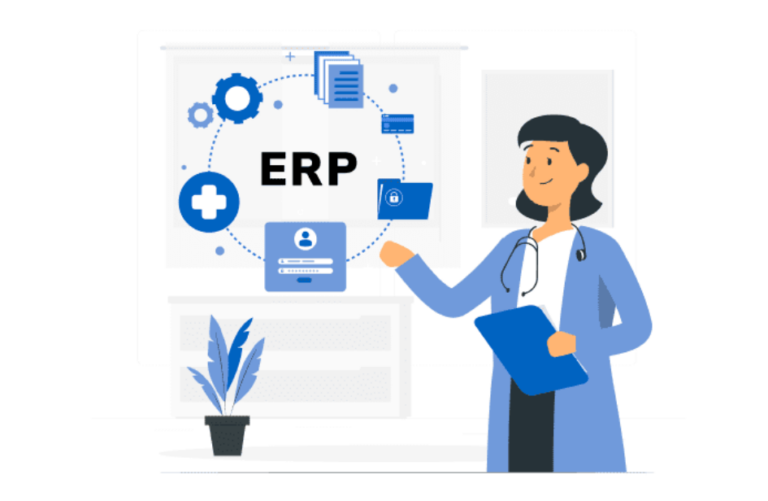
ERP software for healthcare organizations is an integrated enterprise platform designed to unify core business operations—finance, human resources, supply chain, procurement, inventory, and reporting—into a single, centralized system. Unlike clinical software that manages patient care, healthcare ERP manages the business of care.
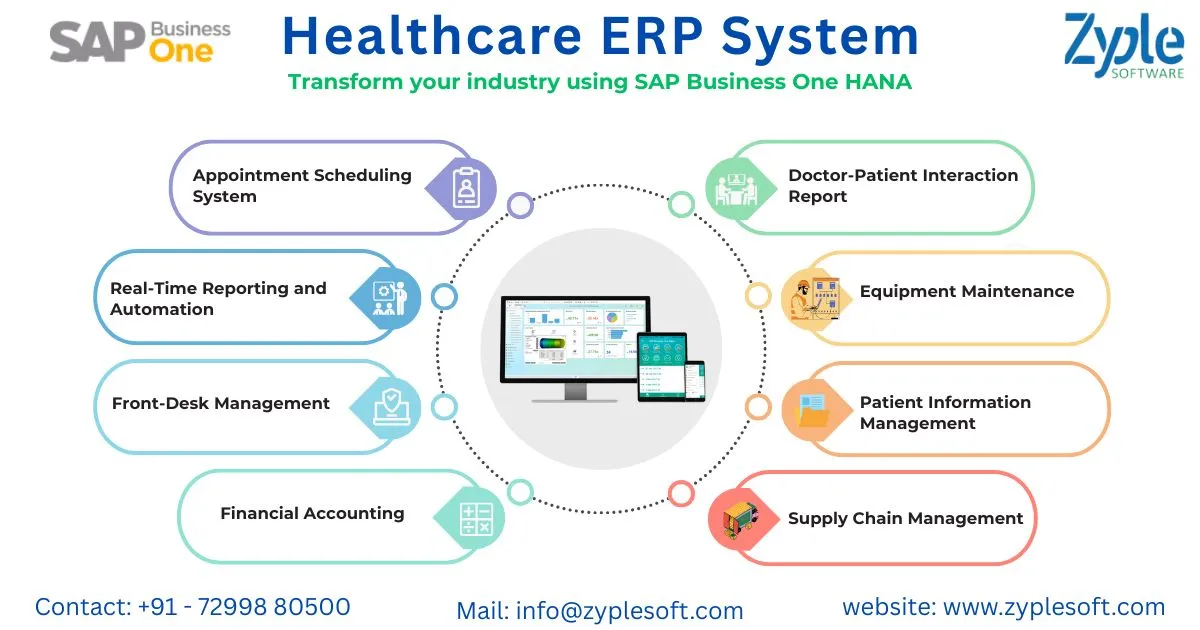
A healthcare ERP system integrates core business processes including finance, human resources, supply chain, and inventory management into a unified platform
. This unification ensures smooth coordination across departments, speeds up decision-making, and keeps organizations audit-ready with built-in compliance features.
For hospitals and clinics, ERP goes far beyond back-office accounting. Modern healthcare ERP platforms provide:
-
Financial management and fund accounting across multiple entities and facilities
-
Supply chain and procurement automation for medical supplies, pharmaceuticals, and equipment
-
Human capital management for clinical and administrative staff scheduling, payroll, and credentialing
-
Asset and facilities management for medical devices, beds, and building maintenance
-
Revenue cycle management integration with billing and insurance claims
-
Regulatory compliance tools for HIPAA, FDA, Medicare, and state-level mandates
-
Real-time analytics and dashboards for executive decision-making
The key distinction is that ERP handles the business operations, while EHRs and clinical systems handle patient care. Most healthcare organizations need both, working together through seamless integration.
3. ERP vs. EHR: Understanding the Critical Difference {#erp-vs-ehr}
One of the most common misconceptions in healthcare technology is that an EHR system can serve as an ERP, or vice versa. They serve fundamentally different purposes.
| Dimension | EHR (Electronic Health Record) | ERP (Enterprise Resource Planning) |
|---|---|---|
| Primary Focus | Clinical care and patient data | Business operations and administration |
| Key Users | Physicians, nurses, clinicians | CFOs, COOs, supply chain managers, HR, administrators |
| Core Data | Medical history, diagnoses, prescriptions, lab results | Financial transactions, inventory, payroll, procurement |
| Regulatory Driver | Patient care quality, Meaningful Use | HIPAA financial compliance, audit trails, cost control |
| Integration | Connects to labs, pharmacies, imaging | Connects to EHR, payroll, banking, suppliers |
An Electronic Health Record (EHR) manages clinical information such as patient records, clinical documentation, and care delivery, while a healthcare ERP manages business functions like financial management, supply chain, human resources, and revenue cycle management. Most healthcare organizations need both, with reliable EHR integration connecting clinical and operational data.
The Integration Imperative: The most successful healthcare organizations don’t choose between ERP and EHR—they integrate them. When your ERP can pull clinical utilization data from your EHR, you can perform procedure-level cost accounting, optimize inventory based on actual patient volume, and generate real-time financial reports that reflect operational reality.
4. Why Healthcare Organizations Need ERP in 2026
The case for ERP software for healthcare organizations has never been stronger. Here are the driving forces behind the accelerating adoption:
4.1 Rising Operational Costs
Healthcare operating margins are under relentless pressure. Labor costs, pharmaceutical prices, and medical supply expenses continue to climb. ERP systems provide the visibility and control needed to identify waste, negotiate better supplier contracts, and optimize resource allocation.
4.2 Workforce Shortages and Complex Scheduling
Nursing shortages and clinician burnout are national crises. Healthcare ERP with integrated HCM helps organizations manage complex shift scheduling, track credentials and certifications, optimize staffing ratios, and reduce overtime costs.
4.3 Fragmented Systems and Data Silos
Many healthcare organizations operate with separate systems for finance, HR, supply chain, and billing. This fragmentation creates data silos, manual reconciliation work, and delayed decision-making. ERP unifies these functions into a single source of truth.
4.4 Stringent Regulatory Requirements
HIPAA, FDA regulations, Medicare reporting, and emerging state privacy laws create a complex compliance landscape. Healthcare ERP systems provide built-in audit trails, role-based access controls, and automated reporting that reduce compliance risk.
4.5 Supply Chain Disruptions
The COVID-19 pandemic exposed the fragility of healthcare supply chains. Modern ERP platforms offer real-time inventory visibility, automated reorder points, and supplier diversification tools that ensure critical supplies are always available.
4.6 Mergers and Acquisitions
Healthcare consolidation continues at a rapid pace. Organizations acquiring new facilities need ERP systems that can quickly consolidate financials, standardize procurement, and integrate new entities without months of manual work.
5. Core Modules and Features of Healthcare ERP Systems
When evaluating ERP software for healthcare organizations, look beyond generic ERP features. Healthcare-specific functionality is what separates a transformative implementation from an expensive disappointment.
5.1 Financial Management and Fund Accounting
Healthcare finance is uniquely complex. ERP systems must support:
-
Multi-entity consolidation across hospitals, clinics, and subsidiaries
-
Fund accounting and grant management for nonprofit health systems
-
Cost center management and procedure-level profitability analysis
-
Automated accounts payable and receivable
-
Real-time financial dashboards for CFOs
5.2 Supply Chain and Procurement
Medical supply chains are mission-critical. Key capabilities include:
-
Inventory tracking for pharmaceuticals, medical devices, and consumables
-
Purchase order automation and three-way matching
-
Contract compliance and vendor management
-
Point-of-care supply tracking integrated with clinical systems
5.3 Human Capital Management (HCM)
Healthcare is a people-intensive business. HCM modules should provide:
-
Clinical and administrative staff scheduling
-
Credentialing and certification tracking
-
Payroll and benefits administration
-
Workforce analytics and retention insights
5.4 Asset and Facilities Management
Hospitals manage millions of dollars in medical equipment and real estate. ERP asset modules track:
-
Medical device lifecycle and maintenance schedules
-
Facility maintenance and compliance inspections
-
Depreciation and capital planning
5.5 Revenue Cycle Management (RCM) Integration
While pure RCM often sits in specialized software, ERP platforms must integrate seamlessly to provide:
-
Claims tracking and denial management visibility
-
Patient billing and payment processing
-
Payer contract analytics
5.6 Compliance and Audit Management
Healthcare ERP must support:
-
HIPAA-compliant data handling and access logging
-
FDA regulatory reporting for device manufacturers
-
Automated audit trails for all financial transactions
-
SOC 2 and ISO 27001 security certifications
5.7 Analytics and Business Intelligence
Modern healthcare ERP platforms transform raw data into actionable insights:
-
Real-time KPI dashboards for bed utilization, revenue per bed, and supply costs
-
Predictive analytics for patient volume and staffing needs
-
Executive reporting packages for boards and investors
6. Top 10 ERP Software for Healthcare Organizations in 2026
Based on functionality, healthcare-specific features, scalability, and customer satisfaction, here are the leading ERP software for healthcare organizations available in 2026:
6.1 Oracle NetSuite
-
Best For: Growing healthcare and life sciences organizations, multi-location providers
-
Key Strengths: Cloud-native architecture; strong multi-entity consolidation; real-time dashboards; HIPAA compliance support; CRM integration
-
Pricing: Approximately $129 per user/month; implementation $25,000–$75,000
-
Why It Stands Out: NetSuite unifies financial and operational data across growing healthcare organizations. One healthcare customer, Anchorum Health Foundation, replaced spreadsheet-based financial processes with NetSuite to improve investment portfolio reporting, budgeting, and grant management as the organization expanded.
6.2 SAP S/4HANA for Healthcare
-
Best For: Large, multi-site health systems and enterprise hospital networks
-
Key Strengths: Deep supply chain management via SAP Ariba; fund accounting; cost center management; real-time financial consolidation; end-to-end procurement visibility
-
Pricing: $250,000+ initial investment
-
Why It Stands Out: SAP S/4HANA serves as the enterprise backbone for large health systems, handling finance, procurement, and supply chain while running alongside best-of-breed EHRs like Epic or MEDITECH. It tracks medical supplies and pharmaceuticals in real time while enforcing contract compliance.
6.3 Infor CloudSuite Healthcare
-
Best For: Complex, multi-entity organizations needing unified finance, HR, and supply chain
-
Key Strengths: Deep healthcare industry expertise (via Lawson legacy); workforce management; AI-powered analytics; strong EHR integration
-
Pricing: Custom quote
-
Why It Stands Out: CHRISTUS Health, a not-for-profit system with more than 600 locations, used Infor CloudSuite Healthcare to consolidate 19 general ledger systems and 16 supply chain management systems into a single cloud platform.
6.4 Oracle Fusion Cloud ERP
-
Best For: Large health systems replacing fragmented legacy applications
-
Key Strengths: Scalable cloud ERP; standardized finance and procurement; AI-powered automation; enterprise performance management
-
Pricing: Custom quote
-
Why It Stands Out: Cleveland Clinic, with 52,000 employees and 150+ outpatient locations, implemented Oracle Fusion Cloud ERP and Supply Chain Management to standardize operations across its global organization including the U.S., London, Abu Dhabi, and Toronto.
6.5 Workday
-
Best For: Large, people-intensive health systems prioritizing workforce and finance transformation
-
Key Strengths: Unified finance + HCM; industry-leading workforce planning; intuitive user interface; strong analytics
-
Pricing: Custom quote
-
Why It Stands Out: Workday’s biggest differentiator is combining enterprise financial management with industry-leading HCM. Nebraska Medicine reduced nurse onboarding time by 75% after implementing Workday.
6.6 Sage Intacct
-
Best For: Mid-market healthcare providers, physician groups, community health centers, and nonprofit systems
-
Key Strengths: Dimensional general ledger; multi-entity consolidation; grant and fund accounting; strong healthcare financial reporting; EHR integration
-
Pricing: $15,000–$35,000/year plus implementation
-
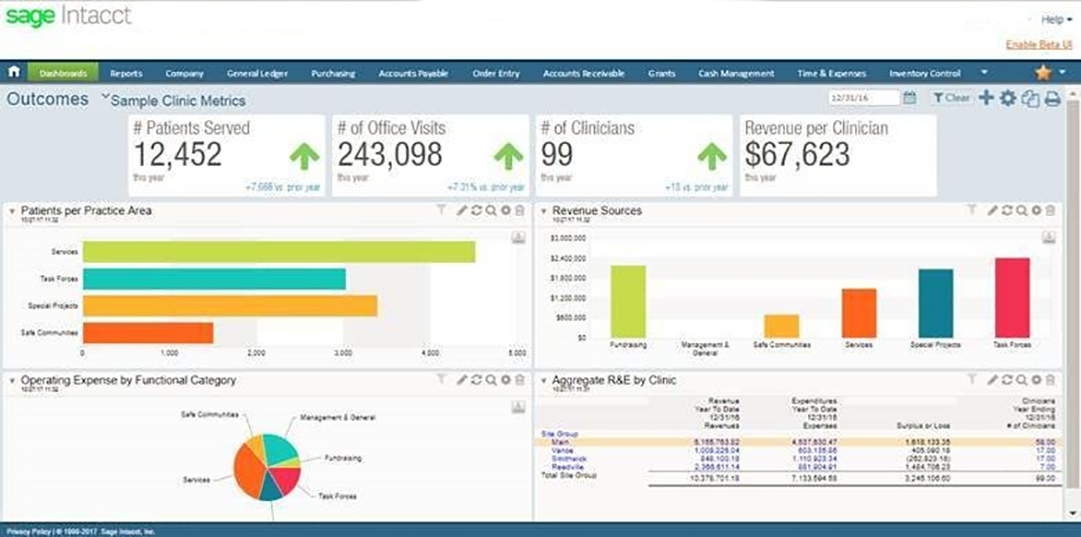
Why It Stands Out: Sage Intacct is consistently rated as a top choice for finance-led healthcare organizations. The platform’s dimensional GL allows tracking of financial performance by facility, department, fund, and grant simultaneously.
6.7 Microsoft Dynamics 365
-
Best For: Healthcare organizations already invested in the Microsoft ecosystem
-
Key Strengths: Native integration with Microsoft 365, Teams, and Power BI; flexible platform; AI-powered insights via Copilot; healthcare industry cloud extensions
-
Pricing: Approximately $180 per user/month; implementation $50,000–$500,000
-
Why It Stands Out: Microsoft has heavily invested in its Healthcare Industry Cloud, extending Dynamics 365 with healthcare-specific capabilities. Organizations can automate workflows and build low-code applications without disconnected systems.
6.8 Multiview ERP
-
Best For: Community hospitals, critical access hospitals, and rural health systems (under 300 beds)
-
Key Strengths: Healthcare-specific ERP; strong EHR integration (Epic, MEDITECH, Oracle Health); budgeting and forecasting; #1 rated by KLAS for smaller hospitals
-
Pricing: Custom quote
-
Why It Stands Out: Multiview is purpose-built for healthcare rather than adapted from a generic platform. Myrtue Medical Center, a 25-bed Critical Access Hospital, reported a 75% faster budgeting cycle and completed month-end close 7–10 days earlier after implementation.
6.9 Acumatica
-
Best For: Smaller clinics, medical device firms, and growing healthcare organizations
-
Key Strengths: Flexible cloud architecture; consumption-based pricing; strong inventory and distribution modules; mobile access
-
Pricing: $50,000+ (consumption-based)
-
Why It Stands Out: Acumatica’s unique pricing model doesn’t charge per user, making it cost-effective for organizations where many employees need occasional system access. It’s particularly strong for healthcare companies with inventory and distribution needs.
6.10 Odoo
-
Best For: Tech-savvy small-to-mid-size clinics and healthcare startups seeking customization
-
Key Strengths: Open-source and modular; highly customizable; large app marketplace; affordable entry point
-
Pricing: $37.40 per user/month; setup $12,000–$55,000
-
Why It Stands Out: While not exclusively built for healthcare, Odoo’s modular architecture allows organizations to implement only the apps they need—finance, inventory, HR, and patient scheduling—and customize extensively via open standards.
Quick Comparison Table
| ERP Platform | Best For | Key Healthcare Strength | Pricing Model |
|---|---|---|---|
| Oracle NetSuite | Growing multi-location providers | Multi-entity consolidation, real-time dashboards | $129/user/mo + implementation |
| SAP S/4HANA | Enterprise hospital networks | Deep supply chain, fund accounting | $250K+ initial |
| Infor CloudSuite Healthcare | Complex multi-entity systems | Workforce + supply chain unification | Custom quote |
| Oracle Fusion Cloud ERP | Large systems replacing legacy | Global standardization, AI automation | Custom quote |
| Workday | People-intensive health systems | Unified finance + HCM | Custom quote |
| Sage Intacct | Mid-market finance-led orgs | Dimensional GL, grant accounting | $15K–$35K/year |
| Microsoft Dynamics 365 | Microsoft-centric organizations | Power BI, Teams, Copilot integration | $180/user/mo |
| Multiview ERP | Community/rural hospitals (<300 beds) | Healthcare-specific, EHR integration | Custom quote |
| Acumatica | Clinics and med-tech firms | Consumption pricing, inventory | $50K+ |
| Odoo | Small clinics, startups | Modular, open-source, customizable | $37/user/mo |
7. How to Choose the Right ERP for Your Healthcare Organization
Selecting ERP software for healthcare organizations is a high-stakes decision. Follow this structured evaluation framework:
7.1 Define Your Pain Points
Are you struggling with month-end close delays? Supply chain waste? Workforce scheduling chaos? Multi-entity consolidation? Rank your top three operational pain points and prioritize ERP platforms that solve them natively.
7.2 Assess EHR Integration Requirements
Your ERP will not replace your EHR. Map out which clinical systems (Epic, Cerner, MEDITECH, Oracle Health) must integrate with the ERP and verify that your shortlisted vendors offer certified, proven integrations.
7.3 Evaluate Compliance Capabilities
Don’t accept marketing claims at face value. Demand documentation of HIPAA compliance, audit trail capabilities, role-based access controls, and data encryption standards. Verify SOC 2 Type II and ISO 27001 certifications.
7.4 Consider Total Cost of Ownership
Look beyond license fees. Factor in implementation, data migration, training, customization, ongoing maintenance, and internal staff time. Enterprise healthcare ERP implementations can range from $50,000 for small clinics to well over $1 million for large health systems.
7.5 Prioritize User Experience
Healthcare staff are already overwhelmed with complex systems. An ERP with an intuitive interface, mobile accessibility, and minimal training requirements will drive adoption and protect your investment.
7.6 Verify Scalability
If you’re a 50-bed hospital planning to become a 200-bed system through acquisition, ensure your ERP can scale without requiring a painful replacement project.
8. Healthcare ERP Implementation Best Practices
Even the best ERP software for healthcare organizations will fail without disciplined implementation. Follow these proven practices:
8.1 Secure Executive Sponsorship
ERP implementation affects every department. A C-level champion—ideally the CFO or COO—must own the project, resolve cross-functional conflicts, and allocate necessary resources.
8.2 Form a Multi-Disciplinary Team
Include finance, supply chain, HR, IT, compliance, and clinical operations representatives. Healthcare ERP touches every part of your organization, and siloed implementation teams create blind spots.
8.3 Cleanse Data Before Migration
Healthcare data is notoriously messy—duplicate vendor records, inconsistent chart of accounts, and outdated employee files. Dedicate significant time to data cleansing before migration. Garbage in, garbage out applies doubly in healthcare.
8.4 Phase Your Rollout
Don’t attempt to go live with every module simultaneously. Start with core financials, add supply chain in phase two, then HR and analytics. This reduces risk and allows your team to build confidence.
8.5 Invest Heavily in Training
Clinicians and administrators are busy. Provide role-based training, quick-reference guides, and embedded help within the system. Identify power users in each department to serve as internal support.
8.6 Test Integrations Rigorously
Your ERP’s integration with your EHR, payroll, and banking systems must be bulletproof. Test every data flow, every report, and every automated process before go-live.
8.7 Plan for Post-Go-Live Support
The first 90 days after go-live are critical. Ensure you have vendor support, implementation partner access, and internal IT resources available to resolve issues quickly.
9. Common Challenges and How to Overcome Them
Healthcare ERP implementations face unique obstacles. Here’s how to navigate them:
9.1 Regulatory Compliance Complexity
Healthcare ERP must comply with HIPAA, FDA regulations, and Medicare requirements. Developers must implement high-level encryption, role-based authorization, and auto-logout features
.
Solution: Engage compliance officers early in the selection process. Verify vendor certifications and request third-party audit reports.
9.2 Integration with Legacy Systems
Many hospitals still run outdated software that isn’t just a risk to patient information but a problem when it comes to integrating new solutions
.
Solution: Conduct a thorough legacy system audit before selection. Choose ERP vendors with proven integration tools and APIs. In some cases, building custom middleware is necessary.
9.3 Change Management and User Resistance
Healthcare staff are accustomed to their workflows. New ERP systems can trigger resistance, especially if they add administrative burden.
Solution: Involve end-users in the selection and design process. Demonstrate how the ERP reduces their workload—automated requisitions, faster month-end close, easier scheduling—rather than adding to it.
9.4 Budget Overruns
Healthcare ERP projects frequently exceed budgets due to underestimated customization, data migration complexity, and extended timelines.
Solution: Build a 20% contingency into your budget. Prioritize out-of-the-box functionality over customization. Most healthcare organizations don’t need bespoke ERP—they need disciplined use of standard features.
9.5 Downtime and Resilience
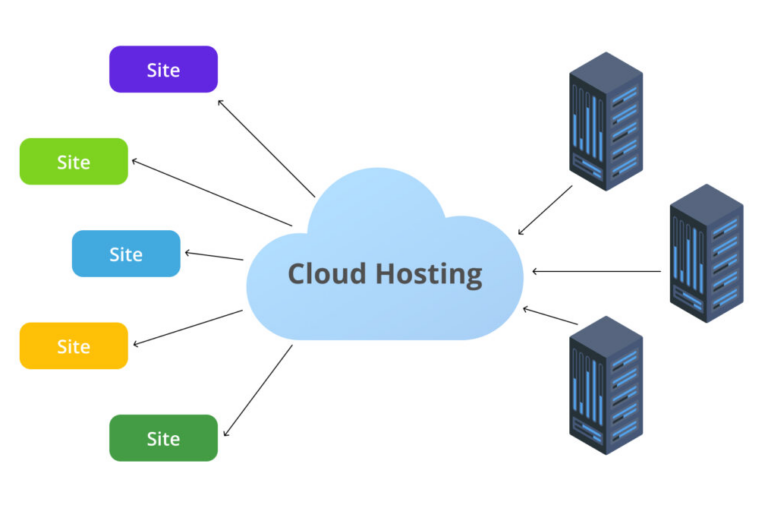
You must do everything to minimize downtime and disruptions during your ERP’s operation, which means building the infrastructure for it and designing it to withstand any load
.
Solution: Opt for cloud architecture to ensure steady uptime and regular data backups. Maintain parallel systems during transition and schedule go-live during low-activity periods.
10. ROI and Measurable Benefits of Healthcare ERP
The business case for ERP software for healthcare organizations is compelling when measured correctly:
Quantifiable Benefits
-
Faster Financial Close: Myrtue Medical Center reduced its month-end close by 7–10 days with Multiview ERP
.
-
Budgeting Efficiency: The same hospital achieved a 75% faster budgeting cycle
.
-
Workforce Productivity: Nebraska Medicine reduced nurse onboarding time by 75% using Workday
.
-
Supply Chain Savings: Real-time inventory visibility typically reduces medical supply waste by 15–25%.
-
Audit Readiness: Automated compliance reporting reduces audit preparation time by 50–70%.
Strategic Benefits
-
Unified Data: A single source of truth eliminates conflicting reports and enables confident decision-making.
-
Scalability: Organizations can acquire and integrate new facilities without operational disruption.
-
Staff Satisfaction: Automating administrative tasks allows clinical and administrative staff to focus on higher-value work.
-
Patient Impact: Operational efficiency translates directly into better patient care through optimal staffing, reliable supply availability, and lower costs.
11. Frequently Asked Questions (FAQs) {#faqs}
Q1: What is the difference between a healthcare ERP system and an EHR?
An EHR manages clinical information such as patient records, clinical documentation, and care delivery. A healthcare ERP manages business functions like financial management, supply chain, human resources, and revenue cycle management. Most organizations need both, integrated together.
Q2: How long does a healthcare ERP implementation typically take?
Implementation timelines vary based on organization size, customization requirements, and data migration complexity, but most projects take anywhere from several months to well over a year. Strong project governance and clearly defined requirements can reduce delays.
Q3: Which healthcare ERP systems offer the strongest supply chain capabilities?
Platforms like SAP S/4HANA for Healthcare, Oracle Fusion Cloud ERP, and Infor CloudSuite Healthcare provide particularly robust supply chain functionality, including inventory management, procurement, materials management, and real-time visibility across multiple facilities.
Q4: What should healthcare organizations look for when evaluating HIPAA compliance?
Look beyond marketing claims and evaluate how the platform supports data protection through encryption, role-based access controls, audit logging, secure handling of patient data, and ongoing regulatory compliance. Understand which security capabilities are native and which rely on third-party integrations.
Q5: Is cloud ERP safe for healthcare organizations?
Yes. Leading cloud ERP providers invest billions in security infrastructure, encryption, and compliance certifications. For most healthcare organizations, vendor-hosted cloud ERP is significantly more secure than self-managed on-premise systems, provided you verify HIPAA Business Associate Agreements (BAAs) and SOC 2 certifications.
Q6: Can small clinics afford healthcare ERP software?
Absolutely. Solutions like Sage Intacct, Acumatica, and Odoo offer entry points suitable for small-to-mid-size clinics. Cloud pricing models have made enterprise-grade functionality accessible without massive upfront capital expenditure.
Q7: Will ERP replace our existing EHR system?
No. Healthcare ERP complements rather than replaces your EHR. The ERP handles business operations while the EHR handles clinical care. Integration between the two is what delivers maximum value.
Q8: What is the best ERP for a community hospital with under 300 beds?
Multiview ERP is specifically recognized as the #1-rated ERP for healthcare organizations with fewer than 300 beds by KLAS Research, based on customer feedback. Sage Intacct and Oracle NetSuite are also strong contenders.
Q9: How much does healthcare ERP software cost?
Costs vary dramatically. Small clinic implementations may start at $25,000–$50,000, while enterprise health system deployments can exceed $1 million. Annual licensing ranges from $15,000 per year (Sage Intacct) to $250,000+ initial investment (SAP S/4HANA).
Q10: Can we customize healthcare ERP to match our workflows?
Most platforms offer configuration options, custom fields, and workflow automation. However, excessive customization increases implementation cost and complicates future upgrades. Prioritize platforms that meet 80% of your needs out of the box.
12. Conclusion: Invest in Operational Excellence
The healthcare industry is undergoing a profound operational transformation. While clinical technology has advanced dramatically, the business infrastructure supporting patient care has lagged behind—until now.
ERP software for healthcare organizations is no longer a luxury reserved for massive hospital networks. Cloud-native platforms, consumption-based pricing, and healthcare-specific solutions have made enterprise resource planning accessible to community hospitals, physician groups, clinics, and long-term care facilities of every size.
As you evaluate your options, remember these guiding principles:
-
Start with your pain points. Whether it’s slow financial close, supply chain waste, or workforce scheduling chaos, let your operational gaps drive your requirements.
-
Don’t confuse ERP with EHR. You need both, integrated, to achieve true operational visibility.
-
Prioritize compliance from day one. HIPAA, FDA, and Medicare requirements are non-negotiable. Verify certifications and security architecture before signing any contract.
-
Plan for people, not just technology. The most sophisticated ERP will fail if your staff doesn’t adopt it. Invest in change management, training, and ongoing support.
-
Think long-term. Choose a platform that can scale with your organization through growth, acquisition, and evolving regulatory requirements.
The right ERP system doesn’t just streamline back-office operations—it creates the operational foundation that allows clinicians and administrators to focus on what matters most: delivering exceptional patient care.